
Understanding Victim Blaming
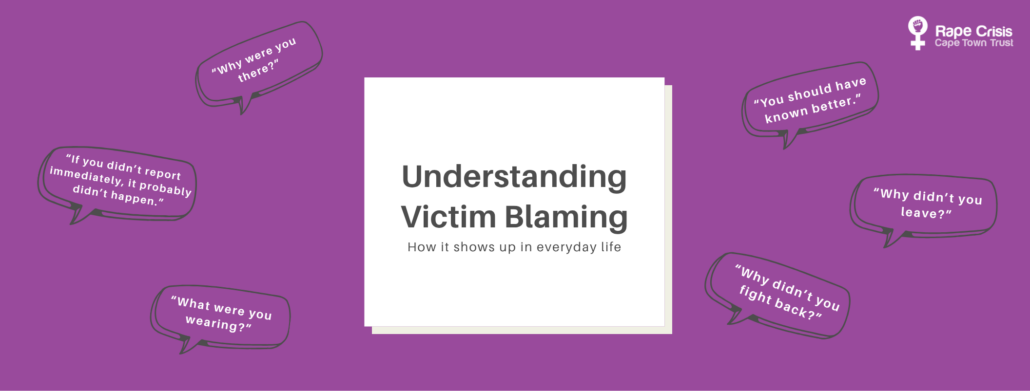
Victim blaming happens when attention is shifted away from the person who caused violence and placed instead on the survivor of sexual violence. It is one of the most common and deeply embedded responses to sexual violence, often so normalised that it becomes almost invisible in everyday life.
It rarely appears in obvious or direct ways. More often, it is found in the language people use, the assumptions they make, and the way they respond to disclosures. It can come from shock, curiosity, discomfort, or a desire to understand what happened, but the impact remains harmful.
Instead of focusing on the person responsible for the harm, conversations often turn toward the survivor’s actions, choices, or behaviour. Whether it is questioning why someone did not report immediately, what they were wearing, where they were, or how they responded, the effect is the same, responsibility is subtly shifted away from the perpetrator.
Because these ideas are so deeply embedded in society, they are often repeated without reflection. They can appear in conversations with friends and family, in community responses, and even within systems meant to offer care and protection. In these moments, survivors may find themselves met with doubt or judgement at the very point they need support most.
The impact can be profound. Survivors may experience shame, self-blame, confusion, fear, or a deep sense of isolation. Many begin to question whether they will be believed or whether speaking out will only lead to further harm. For some, this becomes a barrier to seeking help at all.
Sexual violence is never caused by what someone was wearing, where they were, who they trusted, or how quickly they responded afterwards. The responsibility always lies with the person who chose to cause harm.
Recognising victim blaming means noticing how easily it surfaces in everyday conversations and choosing to respond differently. Instead of questioning survivors, we listen. Instead of searching for fault, we offer belief, care, and support.
If you can’t speak to anyone, speak to us:
English: 021 447 9762
isiXhosa: 021 361 9085
Afrikaans: 021 633 9229
WhatsApp (weekdays): 083 222 5164
Written by
Jameelah Ebrahim

